Leach Press and Oakist Press
Newsletter – Issue 14
31 August 2026
Hello everyone,
Welcome to the 14th Leach Press and Oakist Press newsletter, 31st August 2026.
The aim is simple – once a week, I'll send a short update covering new books, new videos, events, projects and life at Oakwood.
Thank you for subscribing and supporting independent publishing.
The newsletter archive is now live on the website. Each issue also includes a photo appendix from around Oakwood.
View the newsletter archiveNew Oakist Press books
Four new books have recently been released through Oakist Press.
Crime, Justice & Punishment: An Anarchist Perspective
Dicky Dread
This book challenges everything we think we know about crime, law and punishment. Blending history, philosophy, politics and anarchist thought, it explores why societies punish, who benefits, and how justice might be reimagined without domination, prisons or state control.
Living on the Road, Waterways or Off-grid in the UK
Dicky Dread
A practical guide to alternative living in the UK, covering vanlife, boats, off-grid living, traveller culture, legal realities and the many different ways people choose to live beyond conventional housing.
Nature Boy's Magical World
Steve Andrews
A personal testimony of a life shaped by a profound and enduring connection with the natural world. Steve reflects on nature, spirituality, creativity and the experiences that have shaped his remarkable journey.
Physics, Consciousness & Reality
Dicky Dread & Nigel Adams
An exploration of some of the deepest questions in science and philosophy. Drawing together ideas from physics, cosmology, consciousness studies and systems thinking, the book examines the relationship between mind, matter and reality itself.
If you've bought and enjoyed any of these books, a review on Amazon, Goodreads or social media really helps independent authors reach new readers.
New Leach Press book
One new book has recently been released through The Leach Press.
Paddy's Lost His Stash
Dicky Dread
When Paddy loses his legendary festival stash, the Cuckoo Crew launches a wildly chaotic international search spanning festivals, airports and continents – discovering friendship, madness and misadventure along the way.
New videos this week
Living on the Road, Waterways or Off-grid in the UK
Three new episodes were released this week, continuing the chapter on police treatment and bringing it to a close. We look at when police can enter a van, caravan or other home, what to do if you are arrested, and where drunken behaviour crosses the line into a criminal offence.
- Can Police Enter Your Van or Caravan? | Your Rights UK
- Arrested? What Happens Next? | Your Rights in Police Custody
- When a Drunken Night Becomes an Arrest | UK Law
Physics, Consciousness & Reality
New episodes were also released this week, moving from the end of the chapter on relational reality into Chapter 10, Unity and inner experiments. We explore Daoism and wu-wei and the Vedāntic idea that atman and Brahman are ultimately one.
- Stop Forcing It | The Dao, Wu-Wei and the Flow of Reality
- What If You Are the Universe? | Vedanta & Consciousness
Off-grid skills with Dicky Dread
The solar series has also continued, building from the basics of panels, batteries and controllers towards complete off-grid systems. The latest episode looks at potentially dangerous DIY solar mistakes and how to avoid them.
- Can You Really Live Off-Grid With Solar Power? | The Truth About Solar
- How I Find Cheap (and Free) Solar Panels
- Battery Sizing Made Simple for Off-Grid Living
- MPPT vs PWM – which solar controller should you buy?
- 12 V Lighting | Off-Grid Living & Energy
- Modern Portable Power Stations | Off-Grid Living & Energy
- DIY Solar Mistakes That Can Be Dangerous | Off-Grid Living & Energy
New video series: Crime, Punishment & Justice: An Anarchist Perspective with Dicky Dread
- An Introduction to Crime, Punishment & Justice by Dicky Dread
This will continue once I have finished the Physics and Off-grid series.
Oakwood Rewilding Project
Work continues at Oakwood in Llanbrynmair.
The cricket-bat willow scheme now looks unlikely to go anywhere, so our attention has shifted to other planting plans. There has been much better progress with the Woodland Trust scheme: we have made it through Phase 1 and expect to hear the final outcome by the end of this week.
We have also identified a local supplier offering free trees, although we are still waiting to make contact. Looking ahead to winter, I have sourced acers from Welshpool for a small maple copse of around thirty trees.
The cider orchard plans have moved forward too. I have now found a source of the tart apple trees I was looking for, including trees on M25 rootstock. Meanwhile, planting has already begun around Pond-da-Rosa, with several willows now in the ground around the pond.
There has not been a great deal of change in the polytunnel this week, mainly because Erika has been busy elsewhere and has not had much time to work her usual magic in there. Even so, everything is ticking along nicely, with courgettes, carrots, marrows, beans, salad leaves and assorted greens continuing to produce.
The stars at the moment are definitely the tomatoes. We have several different varieties ripening now and they have been absolutely delicious, with plenty being eaten almost as quickly as they can be picked. The broccoli is still looking good, while the aubergines and asparagus remain under Erika's watchful eye.
The wild seed mix has now been scattered around Pond-da-Rosa, concentrating on the bare and disturbed ground around the pond. With the recent rain and more wet weather on the way, the timing seemed about right to give the seeds a chance to settle into the soil and begin the next stage of naturalising the pond margins.
The Oakwood chicken project is also taking shape. The house is now in position and the framework for the run has been assembled beside the woodland. We will be taking Elsi to choose some birds soon.
Erika and Elsi are planning to keep bees for honey. Erika is now sourcing the necessary kit.
Looks like we will not get the campsite up and running until next year – it's too late now, although potential campers still appear in the pub, often walkers of the Gwydir Way. I have public liability insurance in place and Justyn is going to act as the general manager.
The Art-a-van has been totally stripped and cleaned, on the outside at least. No physical progress on the stand-alone solar system yet, except planning and sourcing cheap panels.
We continue to maintain the paths round the site.
Following the water: a woodland corridor forming by itself
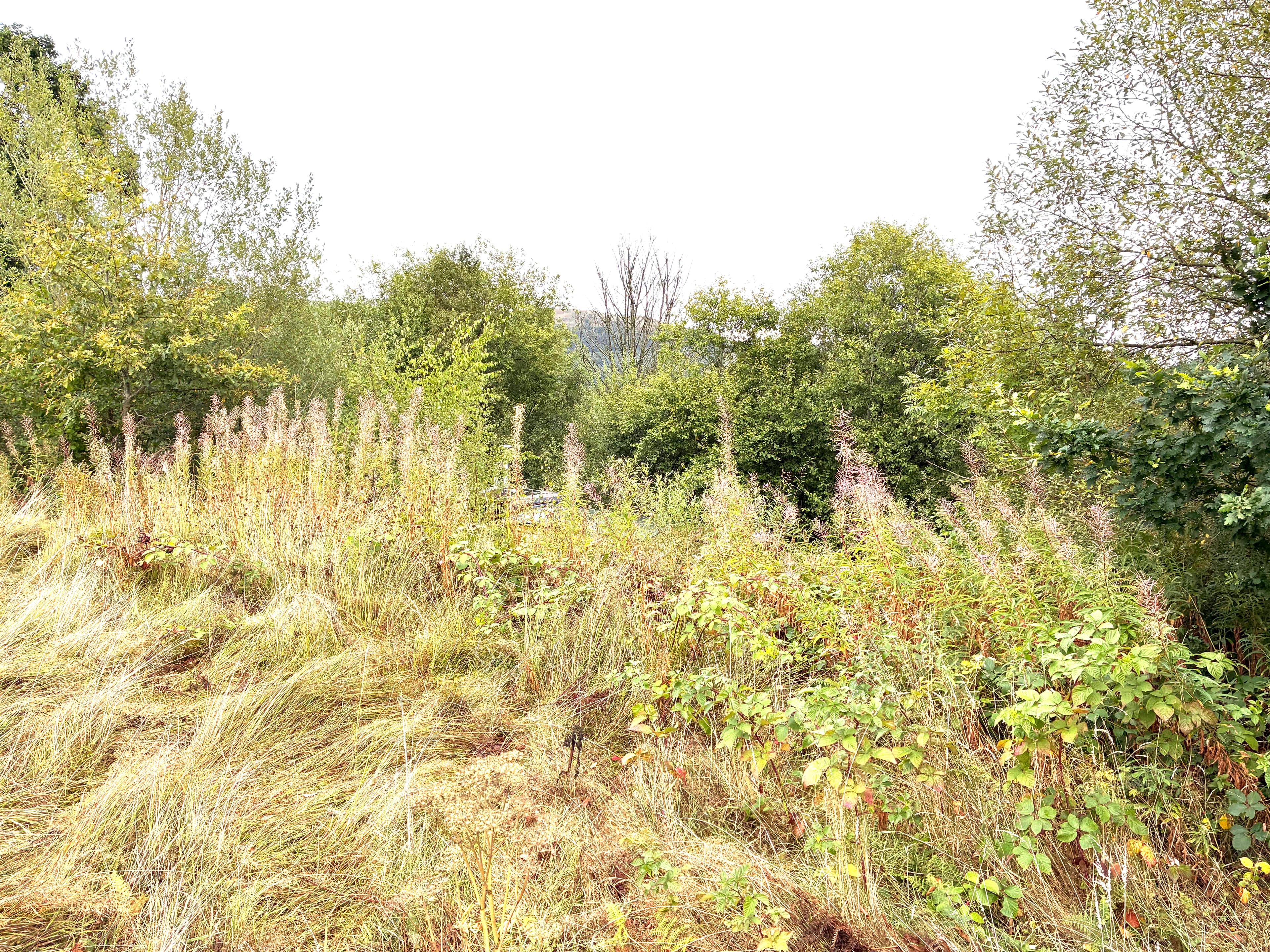
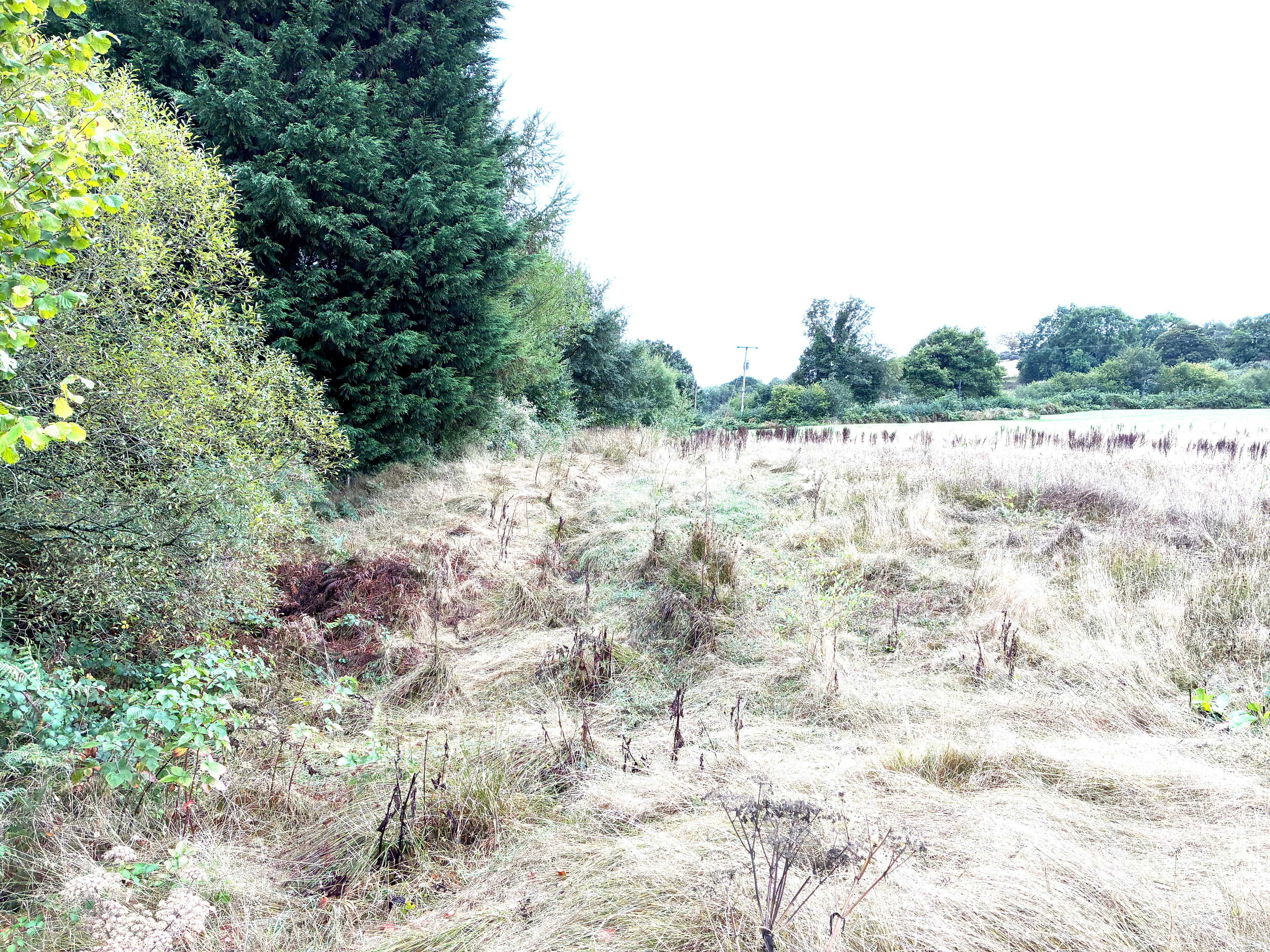
One of the most interesting things about rewilding Oakwood is discovering what happens in the places where we have done almost nothing at all. This week we surveyed the south-eastern part of the property, where water drains from the field, runs down the bank and eventually passes beneath the path near Dread Palace.
Unlike some other parts of Oakwood, nothing in this area has been deliberately planted. Every species recorded here has arrived by itself.
The drainage appears to be shaping the vegetation. Wild angelica, compact rush, meadowsweet, marsh thistle and purple moor-grass are among the plants taking advantage of the damper conditions, while common bent, greater bird's-foot-trefoil, buttercup and meadow thistle add a grassland and flowering component.
It is not simply becoming wet grassland, however. Bramble and bracken are well established, while grey willow, oak, hazel and downy birch have all appeared naturally. Together they give us a glimpse of the next stage of succession. Open vegetation is gradually acquiring scrub and young trees, potentially creating a natural wooded corridor following the drainage line.
Grey willow and downy birch are particularly well suited to playing the role of pioneer trees here. They can establish quickly and begin creating shade, leaf litter and woody structure. Hazel and oak suggest that, given enough time, a more varied woodland community could follow.
Late August is also beginning to change the appearance of the area. Many of the plants that dominated earlier in the summer are now flowering less, setting seed or starting to die back. We intend to leave most of this vegetation where it falls. Dead stems and leaves provide habitat, return organic material to the soil and gradually build the conditions for whatever comes next.
The main intervention will simply be to make sure vegetation does not obstruct the actual drainage route beneath the path. Bramble and bracken will also be watched in case either becomes sufficiently dominant to suppress the more diverse wet grassland vegetation, but there is no reason to remove them simply because they are there.
Perhaps the most encouraging discovery is the young trees. Elsewhere at Oakwood we have spent considerable time planting, protecting and mulching trees. Here, oak, hazel, willow and birch have simply turned up.
This little corner is, therefore, becoming a useful experiment in almost completely passive rewilding. Water is determining the conditions, plants are finding those conditions for themselves, and woodland succession has already begun without us planting a single tree.
For now, our main job is to watch where it goes.
Species recorded this week
A survey of the south-eastern drainage area, running from the field down the bank towards the path near Dread Palace, recorded a mixture of damp grassland plants, tall herbs, scrub and naturally regenerating trees.
All species recorded in this area are self-seeded.
- Wild angelica
- Common bent
- Compact rush
- Dock
- Grey willow
- Marsh thistle
- Bramble
- Bracken
- Greater bird's-foot-trefoil
- Small-flowered hairy willowherb
- Meadowsweet
- Oak
- Hazel
- Downy birch
- Purple moor-grass
- Meadow thistle
- Buttercup
The mixture reflects the influence of water moving through this part of Oakwood. Compact rush, meadowsweet, wild angelica, marsh thistle and purple moor-grass indicate the damper character of the drainage line, while grasses, trefoil, buttercup and meadow thistle contribute a more open grassland element.
More strikingly, grey willow, downy birch, hazel and oak are establishing without planting. Alongside bramble and bracken, they suggest that natural succession is already moving parts of the area from open vegetation towards scrub and eventually woodland.
With many of the summer plants now beginning to die back, the area is entering another stage of its annual cycle. Rather than clearing the vegetation, we will largely allow it to collapse naturally, leaving seed, dead stems and leaf material to become part of the developing habitat.
This is one area of Oakwood where the rewilding principle of doing less appears to be working particularly well.
Around Oakwood this week
Another fairly quiet week at Oakwood, although this time it was my back rather than my foot that decided to put the brakes on things. I managed to do it while reorganising the storage, proving once again that even tidying up can apparently be classed as a dangerous activity. Consequently, progress has been a little slower than planned.
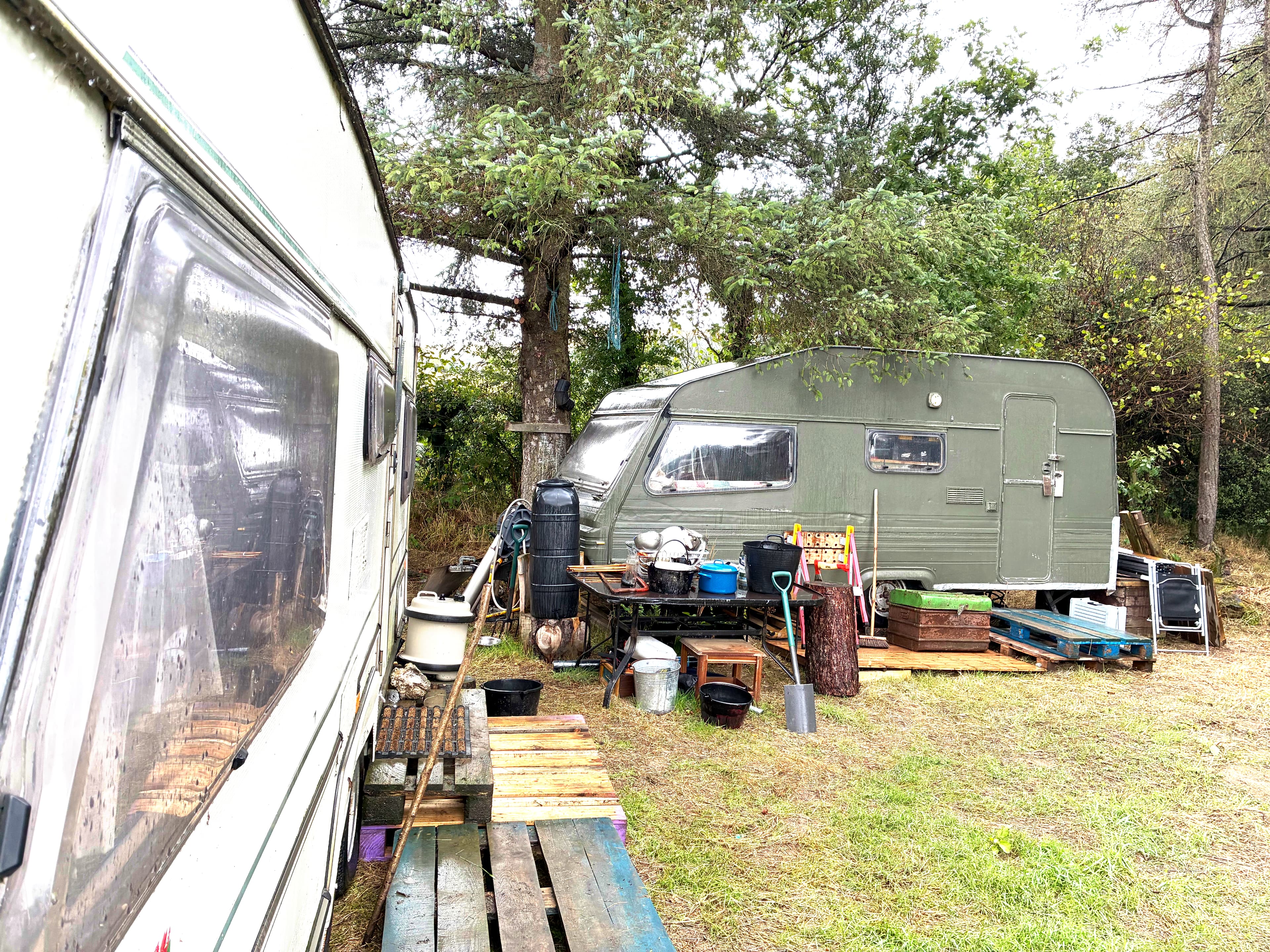
A few things have still moved forward. Justyn has shifted his caravan closer to the woodland and chicken coop, and I have started laying the new carpet in the horsebox.
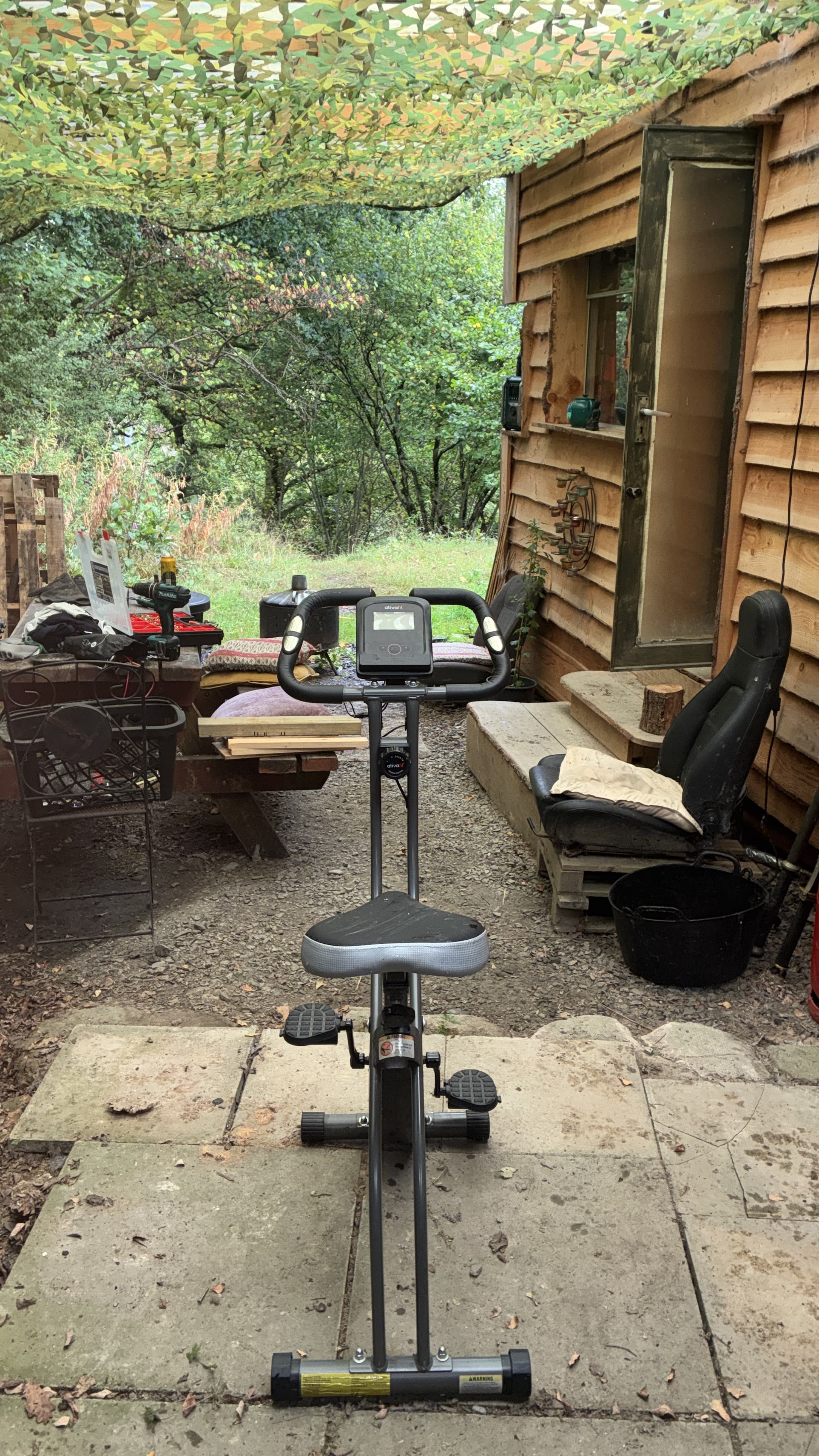
We also completed that most essential of rural expeditions: a proper tip run. A satisfying quantity of accumulated old tat has finally disappeared, although the trip wasn't entirely one-way traffic as I came home with an exercise bike from the tip shop and, as always, met my lovely mate Gibby with his Mohican standing proud.
The rain has provided a decent test for Dread Palace and, happily, everything is holding up well. That is particularly reassuring after interfacing the shepherd's hut this year and cutting two new windows into the horsebox. So far, the various additions and alterations appear to be keeping the Welsh weather firmly on the outside.
Away from Oakwood, Erika and I have booked flights to Spain for October. Part of the trip will be a rather unusual investigation into the mysterious death of her uncle there in the 1980s, a story I will return to in future newsletters as we find out more. It will also give us a long-earned break and, just as importantly, some proper time together.
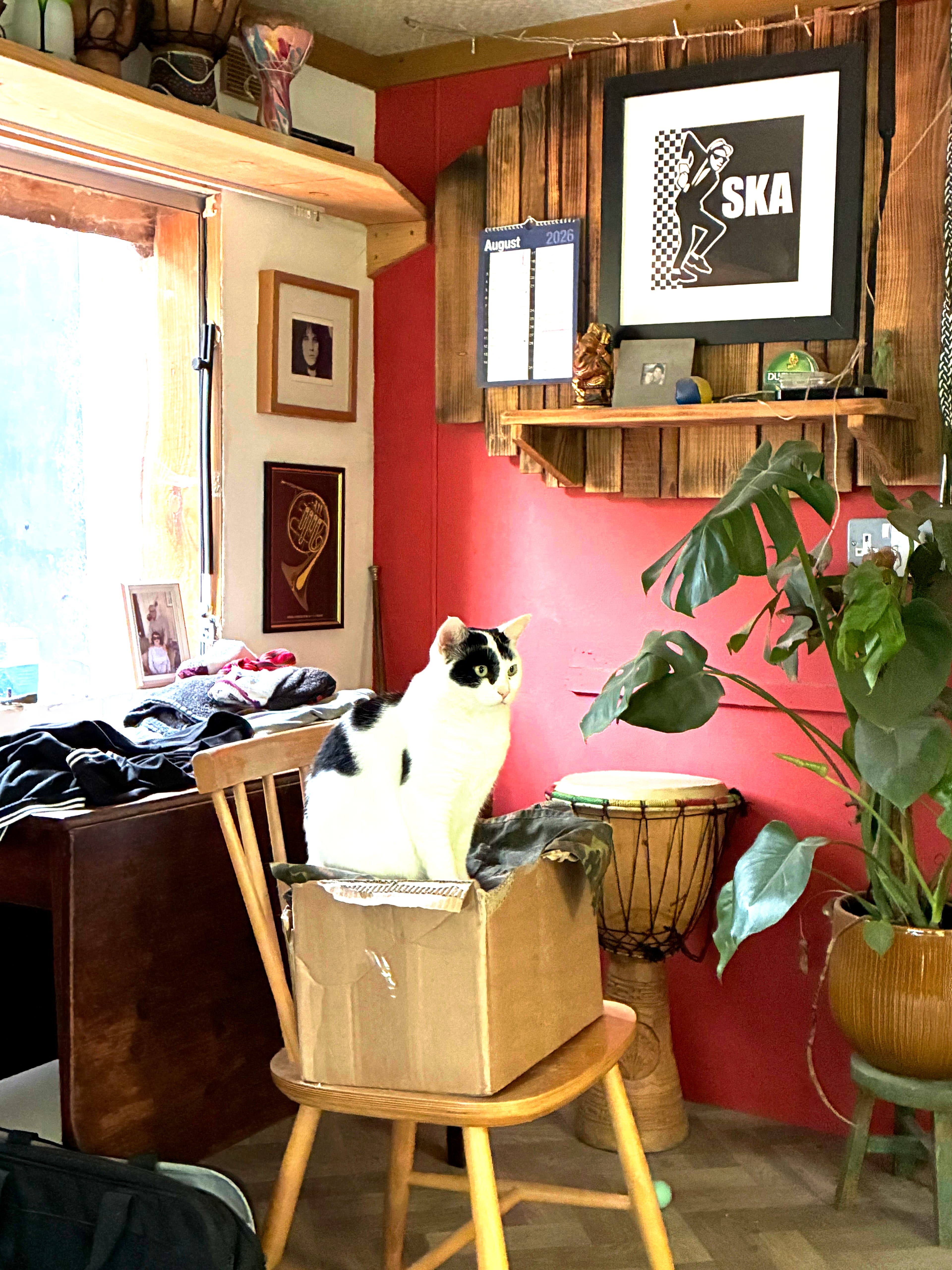
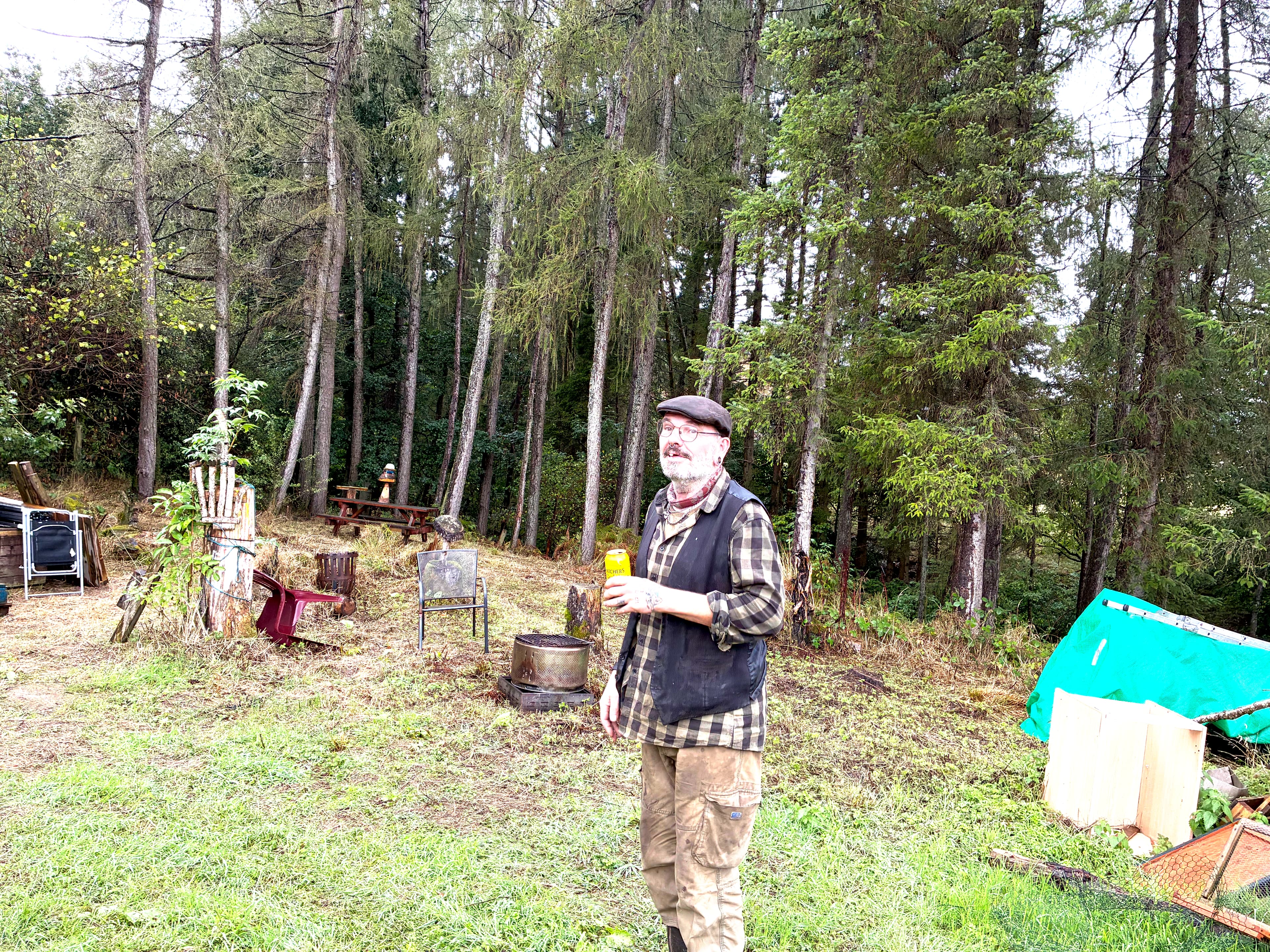
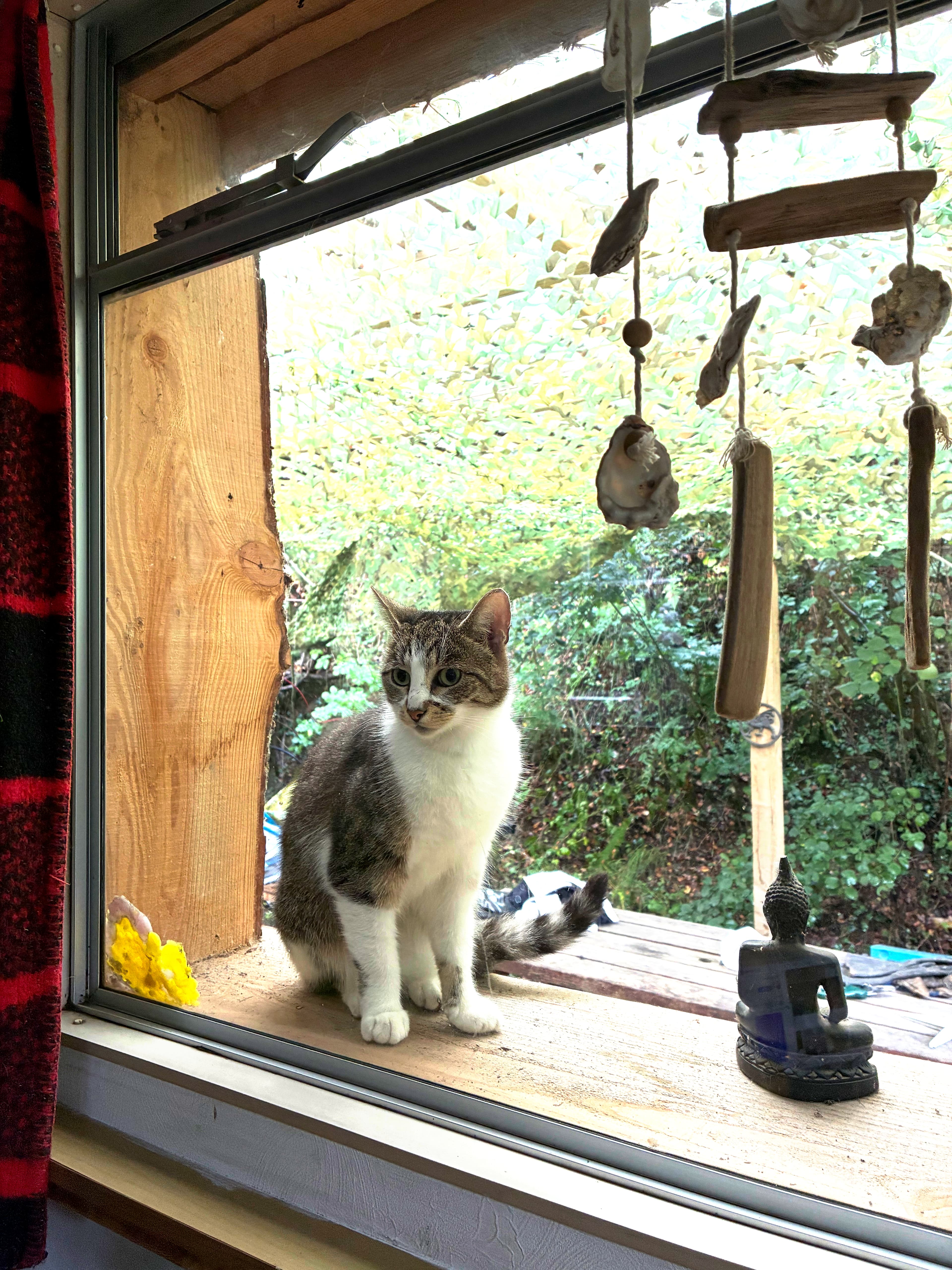
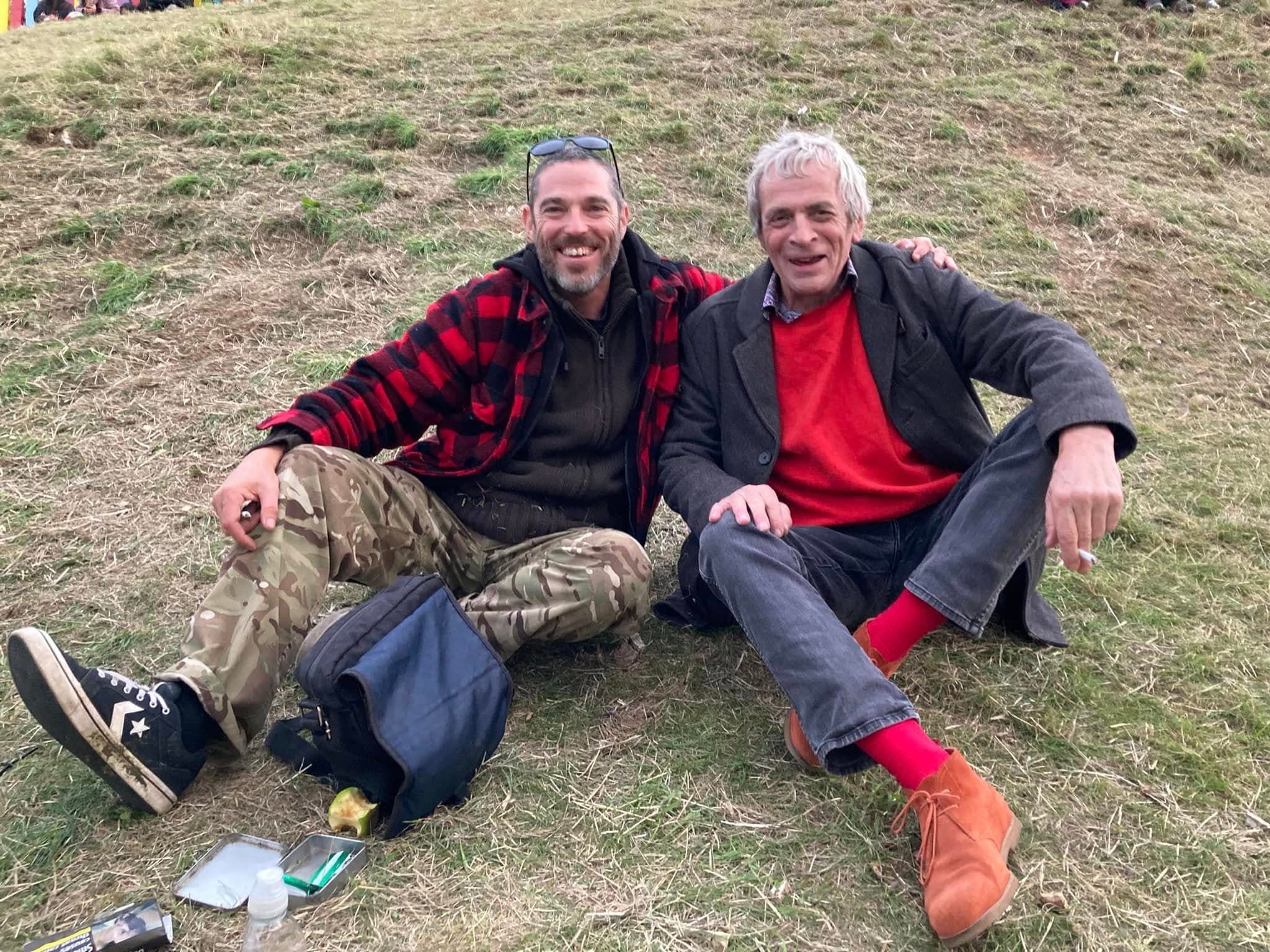
Photographs from Issue 14
More photographs from Oakwood and the week's events.

Monthly feature
September 2026 Appendix
September marks the beginning of the autumn phase at Oakwood. The new appendix contains the September Rewilding Plan and will grow through the month with photographs, species observations and updates from around the site.
View the September appendixDJ news
There was another regular Dicky Dread outing on Friday, with a set on the decks and the usual wandering through whatever seemed appropriate at the time.
Dicky Dread Show – 28 August 2026RIP Keith Bailey
Sadly, the other DJ news this week is much more personal. My mate and neighbour Keith Bailey has died. Better known to many as Keith the Bass, he was a cornerstone of the UK free-festival and psychedelic scene, playing with Here & Now, Planet Gong, Gong Maison and Gong, as well as writing and singing on some of their music.
I knew Keith personally as we were neighbours in Kingston for a bit, which makes this one rather closer to home. Our friendship wasn't always entirely conventional: at one point I was banned from his gaff for being too pissed. But that's another story.
I have put together a tribute mix featuring tracks that Keith played on, wrote or sang, alongside music and musicians that influenced him or inhabited the same musical world. I would have included more Here & Now, but Mixcloud only allows three tracks from the same band. The set finishes with Keith's favourite Hendrix track.
A photograph of Keith and me is included in this issue's photographs.
RIP Keith Bailey. Safe travels, mate. And smile when you remember those wonderful weather forecasts. Keith is part of the weather now.
Listen to the Keith da Bass tributeThe December ska and punk all-dayer in Newtown – celebrating my 60th, along with Erika's, Justyn's and Gibby from the tip's birthdays – is now well into the planning stage. All welcome.
View the Facebook eventModelling
Nothing new this week.
Coming soon
Work continues on a number of current and future projects, including:
- Further video episodes of Physics, Consciousness & Reality
- Further video episodes of Living on the Road, Waterways or Off-grid in the UK
- Further video episodes of Crime, Punishment & Justice (although not until one of the above is complete)
- Further videos on off-grid living, continuing on the theme of solar (full solar design example next, hence slight delay)
- New Oakist Press releases:
- Monique & the Thingies (Tom Rantula – in final stages of production): follows Monique and Malachi, two rebellious spider monkeys who leave Monkey Island after giants destroy their forest. Seeking the “perfect thingi”, a better way of organising society, they travel through strange animal communities governed by surveillance, religion, authoritarianism, hierarchy, tradition and claims of superiority. Their adventures are comic, dangerous and increasingly political, exposing how power can corrupt even apparently orderly societies. Gradually, they discover that freedom cannot safely be entrusted to rulers or supposedly higher authorities. Their journey ultimately points towards cooperation, mutual aid, collective decision-making and individual responsibility as foundations for a freer society.
- Resources and the Future: An Anarchist Perspective (Dicky Dread – being proofread by Jude Daniels): asks what happens when societies built around endless economic growth encounter the physical limits of a finite planet. It argues that money and markets can obscure the realities that actually sustain civilisation: energy, materials, ecosystems, land, water and biodiversity. Drawing on physics, ecology, history and numerous case studies, the book examines energy, food, technology, wildlife, scarcity and social organisation. Rather than proposing a rigid utopia, it explores a resource-based future founded on sufficiency, ecological stewardship, decentralisation, cooperation and mutual aid, suggesting that gradual experimentation could move society towards systems better aligned with planetary limits.
- Books from Marge Hunter, Saz Denny and Stu Schotnes
- Education: An Anarchist Perspective (Dicky Dread)
Author's note
Another fairly quiet week at Oakwood, although this time it was my back rather than my foot that decided to put the brakes on things. Even so, Oakwood carries on changing whether we are actively working on it or simply watching. The self-seeded woodland corridor along the drainage line is a particularly good reminder that sometimes the most interesting results come from doing very little.
Stay connected
Website
https://www.leach.pressYouTube
https://www.youtube.com/@dickydreadsmixesThank you again for your support. If you enjoy these newsletters, please forward them to a friend who might be interested in books, off-grid living, rewilding or independent publishing. Every recommendation really helps.
Until next week,
Dicky Dread
Leach Press & Oakist Press
Appendix 1
Oakwood Rewilding – September 2026 Tasks
Overview
September marks the beginning of the autumn phase at Oakwood. Summer growth will begin to slow, many plants will be producing mature seed and the first signs of seasonal dieback should appear. The emphasis can now move away from intensive vegetation control and towards seed dispersal, habitat management, monitoring and preparation for winter tree planting.
Intervention should remain selective. Areas that are developing successfully through natural succession should increasingly be left alone, while effort is concentrated on young trees, useful seed sources, paths and areas where a small amount of management can increase diversity.
Priority 1 – Dock Management
The main dock battle should now be largely over.
Continue checking for late seed heads, plants that have re-flowered, overlooked mature seed heads beside paths and young trees, and dense areas where dock is suppressing newly established trees.
Remove ripe seed heads where practical, but there is no need to cut the whole plant. Allow leaves and stems to die back naturally and return nutrients to the soil.
Avoid digging established dock unless there is a specific reason to remove an individual plant, as soil disturbance may expose further dormant seed.
Priority 2 – Bracken
Begin reducing active bracken management as the plants naturally enter autumn decline.
Continue crushing or cutting only where bracken is smothering young trees, blocking paths, invading newly developing meadow areas or preventing access for autumn planting work.
Once fronds begin yellowing and dying back, leave them to collapse naturally. Use September to identify the patches that will need renewed attention next spring rather than trying to eliminate them now.
Priority 3 – Young Trees
Carry out an autumn inspection of planted and naturally regenerated trees.
- oak
- birch
- hazel
- willow
- hornbeam
- hawthorn
- ash
- maple
- Siberian pine
- horse chestnut
- fruit trees
Look particularly for damaged guards, rubbing stakes, broken branches and trees disappearing beneath late-season vegetation. Maintain a small clear area immediately around vulnerable planted trees where necessary, but continue allowing naturally regenerated trees to compete unless there is obvious suppression.
Mulch where useful, particularly around recently planted or weaker specimens. Water only if dry conditions continue.
Priority 4 – Winter Woodland Planting
Finalise the winter woodland expansion plan.
- the planned maple copse
- additional oak
- hazel
- willow
- hawthorn
- blackthorn
- fruit and cider trees
- any Woodland Trust or other donated trees that become available
Allow existing natural regeneration to influence the layout rather than planting rigid blocks. The aim should be irregular woodland edges, glades and patches of scrub rather than evenly spaced forestry.
Begin planting later in autumn once trees are dormant and soil moisture has properly returned.
Priority 5 – Seed Collection and Distribution
September should be one of the main seed months.
- common knapweed
- greater bird's-foot trefoil
- yarrow
- teasel
- meadowsweet
- wild angelica
- fireweed
- thistles
- sorrel
- other successful native wildflowers
Only collect a proportion of available seed. Leave plenty for birds, insects and natural dispersal.
Some seed can be stored somewhere cool and dry. Other seed can be scattered immediately into suitable areas, particularly bare or disturbed ground around the former lake and Pond-da-Rosa area and thin patches within existing meadow.
Use seed gathered from Oakwood itself wherever possible. It is already proving that it likes the local conditions.
Priority 6 – Pond-da-Rosa Area
Continue allowing the former lake area to develop through natural succession. September provides a good opportunity to scatter locally collected seed across exposed or sparsely vegetated ground.
- teasel
- greater bird's-foot trefoil
- knapweed
- yarrow
- meadowsweet
- wild angelica
- fireweed
Match species approximately to conditions rather than trying to create a designed planting scheme. Meadowsweet and wild angelica belong towards damper ground, while knapweed, yarrow and trefoil can be concentrated on better-drained areas.
Monitor which species are colonising without assistance before adding too much. If autumn rain refills any wet depressions, record how vegetation responds.
Priority 7 – Meadow Management
Allow most meadow vegetation to continue standing while seeds mature.
Where an area has become heavily dominated by coarse grass, consider a small amount of selective cutting followed by removal of the cut material. This can gradually reduce fertility and create opportunities for wildflowers.
Do not cut everything.
- overwintering insects
- spiders
- small mammals
- seed-eating birds
- structural diversity
Experiment with managing different meadow patches differently rather than giving the whole field one treatment.
Priority 8 – Woodland and Stream Edge
Continue observing the woodland and stream-edge succession beside the hardstanding. Avoid unnecessary clearance.
- alder
- grey willow
- ash
- hazel
- hawthorn
- larch
- spruce
- ferns
- bramble
- ivy
- wet-ground vegetation
Keep paths usable and prevent bramble or vigorous climbers from overwhelming young trees, but otherwise allow the layered woodland structure to develop.
Continue treating hemlock water-dropwort as a plant to observe rather than handle unnecessarily.
Priority 9 – Orchard Development
Prepare for winter orchard planting. Confirm the locations of existing fruit trees and identify gaps suitable for additional cider varieties.
Continue checking guards and stakes, maintaining mulch, preventing heavy grass growth immediately around trunks and recording which trees performed best during the dry summer.
Finalise sourcing of suitable apple varieties, particularly vigorous cider or tart varieties on appropriate rootstocks.
Avoid planting merely to fill space. The orchard can remain loose and integrated into the wider rewilding landscape.
Priority 10 – Wood Chip and Deadwood
Continue using wood chip selectively around:
- planted trees
- orchard trees
- paths
- woodland edges
- polytunnel areas
Do not mulch naturally regenerating areas indiscriminately. Continue leaving fallen timber and creating habitat features from woody material.
- log piles
- brash piles
- partly buried timber
- standing deadwood where safe
- piles of branches at woodland edges
Autumn is a good time to resist the instinct to make everything tidy. Ecologically, scruffiness has excellent credentials.
Priority 11 – Wildlife Habitat
Prepare the site for winter wildlife.
- seed heads
- standing grasses
- hollow stems
- nettle patches
- bramble
- deadwood
- leaf litter
- dense scrub
Avoid clearing vegetation merely because it has finished flowering. Look for areas where birds and mammals are already using vegetation for shelter and leave these particularly undisturbed.
Continue developing structural variety rather than maximising any single habitat type.
Priority 12 – Species Recording
Continue the Oakwood species surveys, but begin recording seasonal change as well as species presence.
Plants
- remaining flowering plants
- seed heads
- grasses
- rushes
- sedges
- young tree regeneration
- berries and fruits
- first signs of autumn colour
Fungi
Begin watching closely for fungi as wetter conditions return. Photograph unfamiliar specimens rather than disturbing them where possible.
Insects
- late butterflies
- bees
- hoverflies
- dragonflies
- grasshoppers
Birds
- changing feeding behaviour
- mixed feeding groups
- migrants
- birds feeding on berries and seed heads
September should begin revealing which parts of Oakwood are important as autumn feeding habitat.
Priority 13 – Polytunnel and Growing Areas
Continue harvesting the remaining summer crops. Clear genuinely diseased material, but compost healthy plant material wherever practical.
Begin preparing space for autumn and winter crops. Continue adding organic material to beds rather than leaving soil bare.
Use spent vegetation, compost and suitable mulch to protect and improve soil through winter.
Review what performed particularly well or badly during this year's dry conditions and use that information when planning next year.
Priority 14 – Paths and Access
Continue keeping the established path network open. September is a useful time to cut back vegetation encroaching onto paths before winter makes access harder.
Avoid widening paths unnecessarily. The existing path system should remain the main human footprint through the site, allowing everything beyond it to become progressively less managed.
Priority 15 – Autumn Planting Preparation
Prepare everything required for the main autumn and winter planting period.
- tree guards
- stakes
- ties
- mulch
- spades
- planting stock
- maps of planting areas
- stored seed
- labels where needed
Repair and reuse existing guards wherever possible.
Mark natural saplings before surrounding vegetation dies down completely, particularly small oak, birch, willow and hazel that could otherwise disappear from sight during winter work.
General Principles for September
- Allow natural succession to remain the default.
- Reduce intervention as summer growth slows.
- Collect and redistribute local seed.
- Leave plenty of seed for wildlife.
- Retain dead vegetation wherever it provides habitat.
- Protect vulnerable planted trees without automatically clearing naturally regenerated ones.
- Prepare for tree planting rather than rushing to plant into dry soil.
- Use autumn to observe which areas are beginning to manage themselves.
- Maintain a mosaic of meadow, scrub, wet ground and woodland.
- Let different parts of Oakwood develop differently.
End of Month Review
At the end of September assess:
- Have any significant dock seed heads escaped the summer management?
- Which bracken areas weakened most successfully?
- Which planted trees survived the summer best?
- Which self-seeded trees have appeared this year?
- Which wildflowers produced the greatest amount of viable seed?
- Has seed been collected or scattered around the Pond-da-Rosa area?
- Which meadow areas should remain completely uncut through winter?
- Which areas might benefit from selective cutting and removal?
- Are the woodland and stream-edge areas developing without intervention?
- What trees are available for autumn and winter planting?
- Where should the maple copse and new woodland planting go?
- Which parts of Oakwood required noticeably less management this year?
The long-term objective remains unchanged: to guide Oakwood towards a resilient mosaic of woodland, meadow, scrub and wet habitats where natural processes increasingly replace human management.
September should therefore be less about making the land do things and more about reading what the summer has produced. The vegetation is beginning to hand the site over to autumn. Our job is mainly to make sure we do not interrupt the handover.