Living Anarchy Today
Off-Grid Life at Oakwood, Mid-Wales
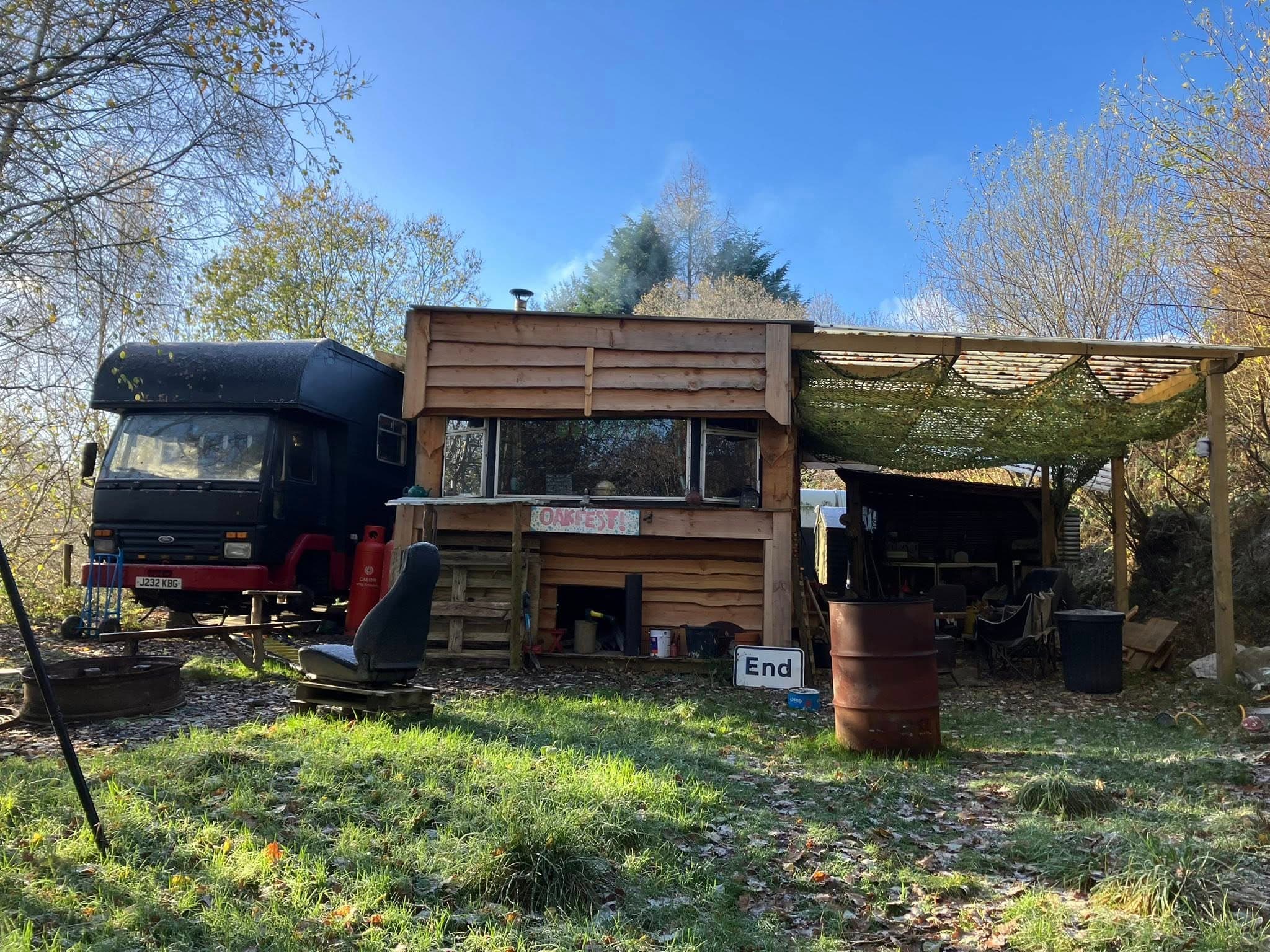
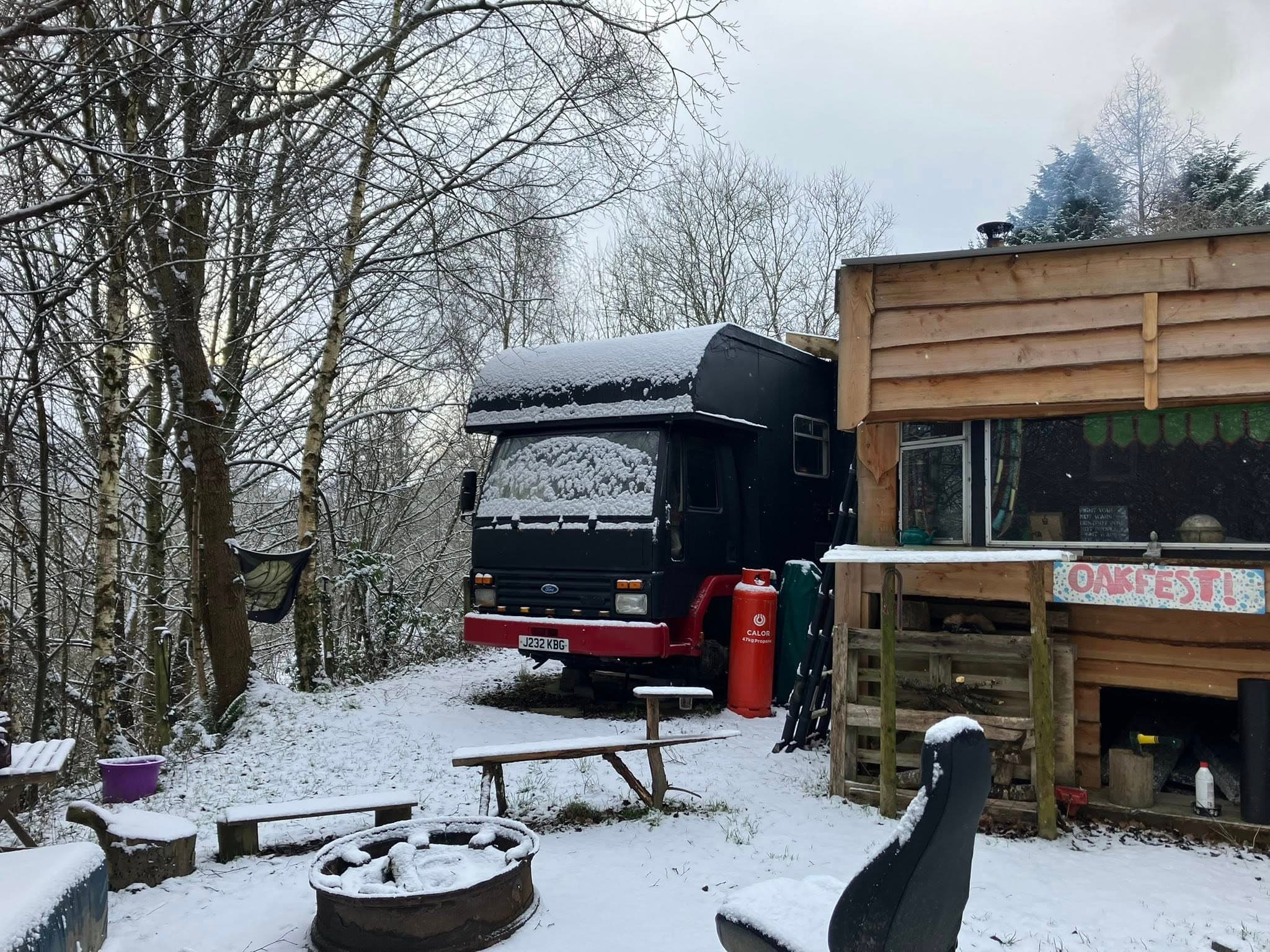
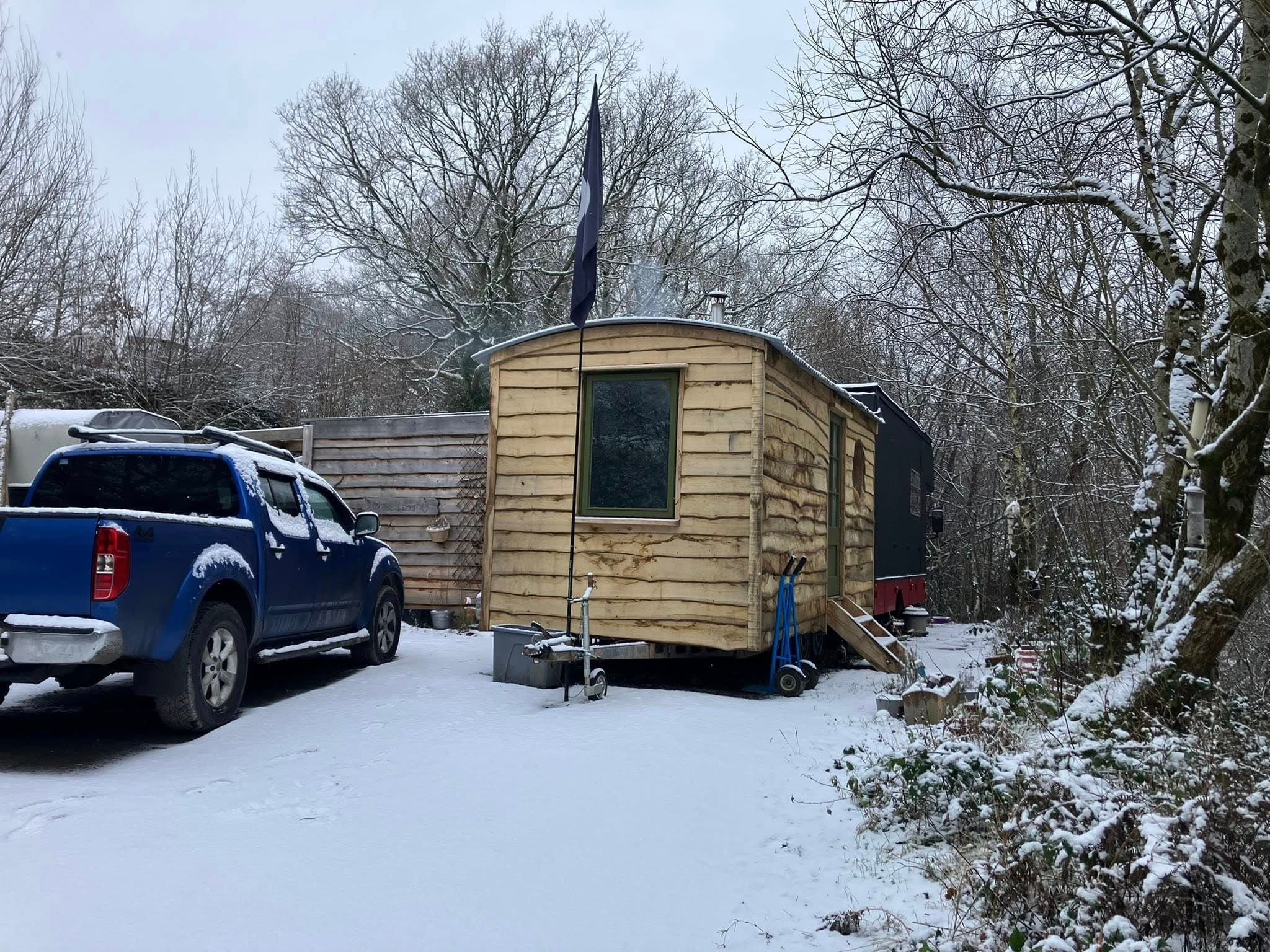
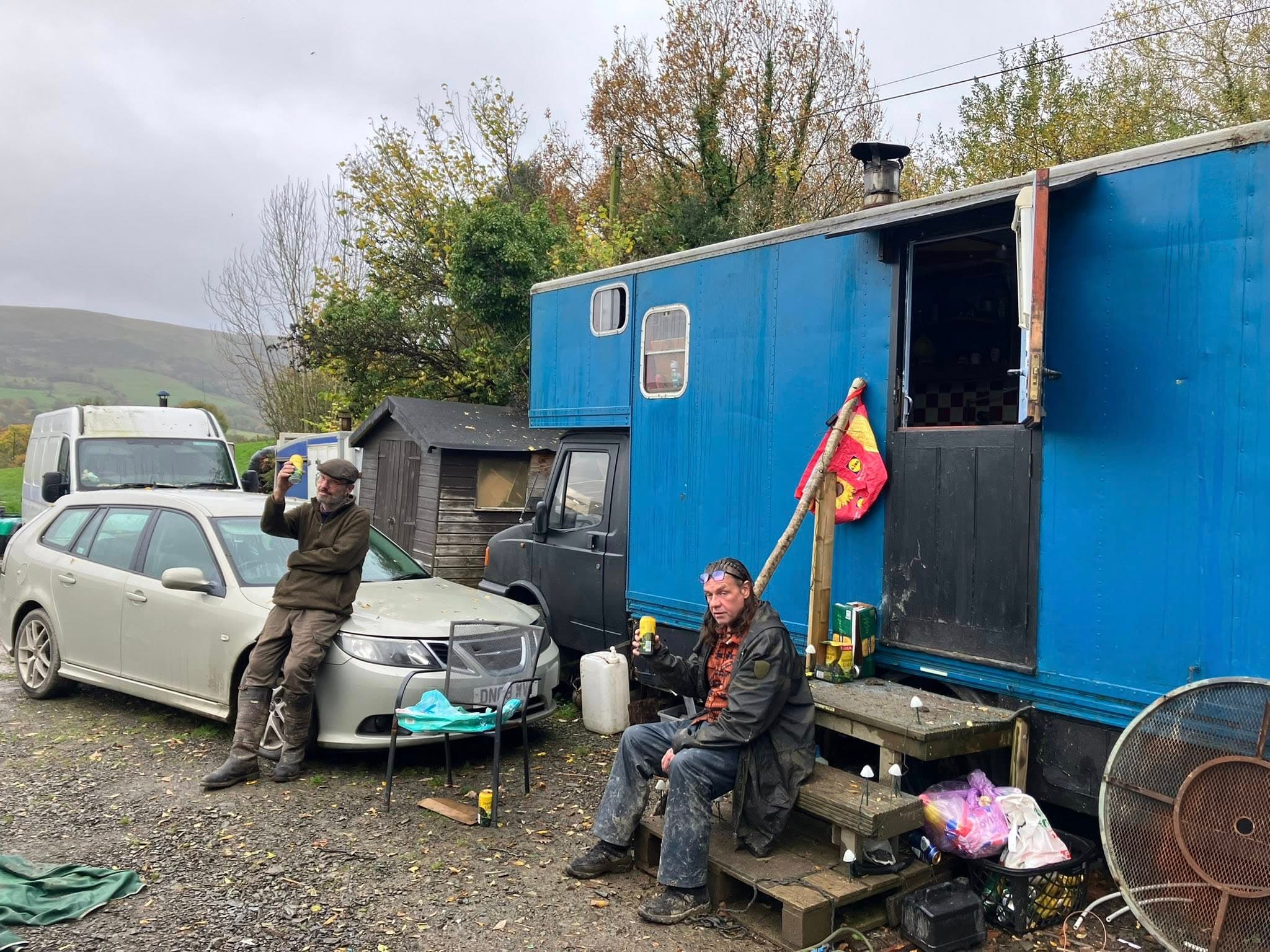
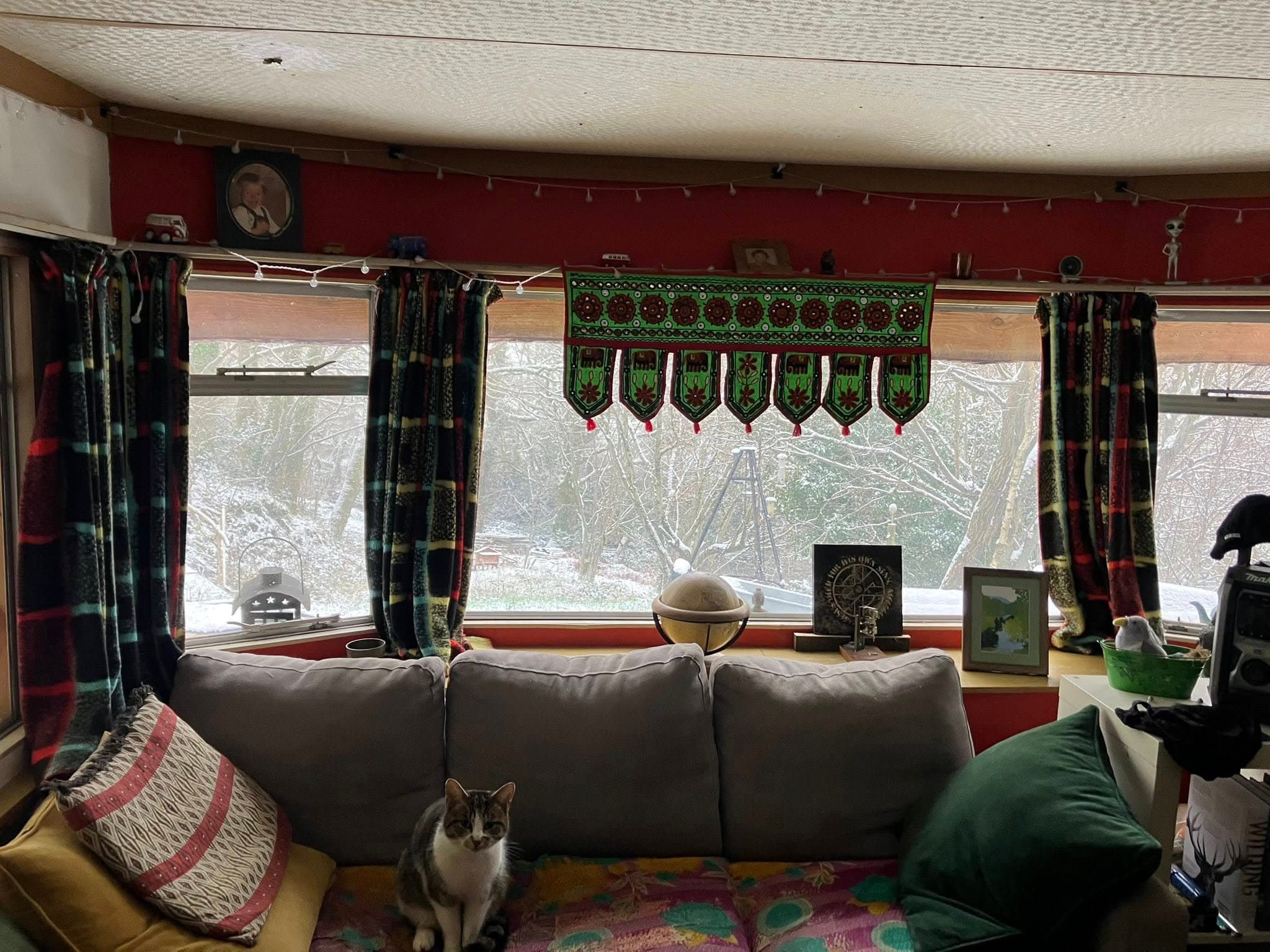
I now live fully off-grid on twelve acres in mid-Wales, in a self-built and continually evolving collection of structures centred around a converted 7.5-ton Ford Cargo horsebox. A static caravan, physically bridged to the horsebox, and a shepherd's hut form a single home supplied by solar electricity, borehole water, wood-fuelled heating and bottled gas.
Oakwood is more than somewhere to live. It is an ongoing practical experiment in reducing dependency, sharing resources, rewilding land and finding out how far ideas about autonomy, mutual aid and living differently can be put into everyday practice.
The route here was a long one. After I stopped drinking at forty, my university career took off and, after some time, I had enough money to buy the land, a story described in One Flew into The Cuckoo's Nest. Before that, I lived off-grid in various forms, including a Ford Cargo 7.5-ton horsebox on a farm near Lancaster and later a converted Iveco Daily laundry van. That became the FOD Wagon and is still used as my festival vehicle today.
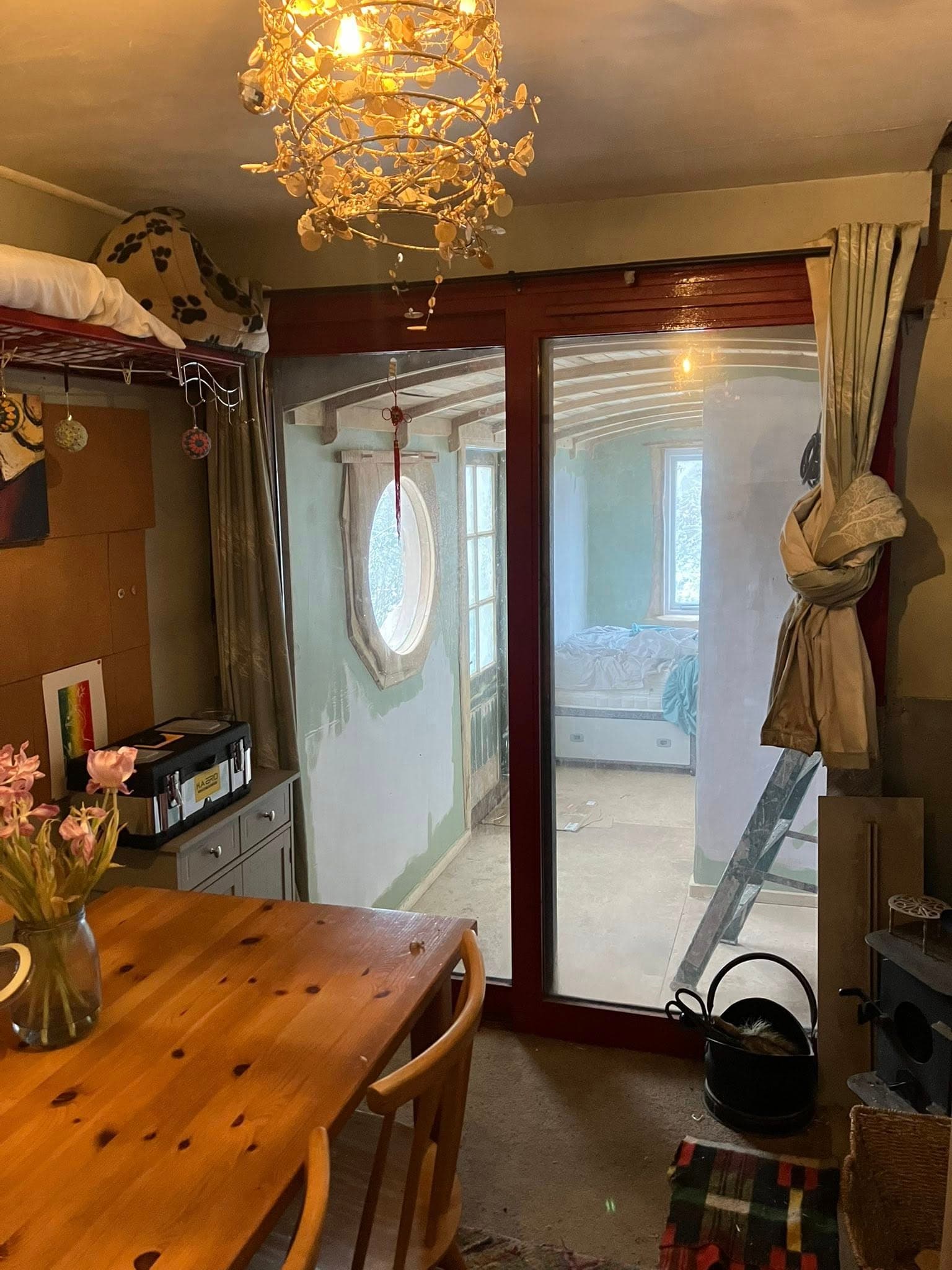
I lived in the van in Derby while waiting for the land purchase to complete. Once the land finally came through, I moved on in the horsebox, then brought a static caravan alongside it. I welded a physical bridge between the horsebox and the static, fully cladded and insulated the static, and later interfaced a shepherd's hut onto the back of the horsebox. The result is a single, evolving, self-built living structure.
Fully Off-Grid
Water
Borehole
Electricity
Solar-powered
Heating
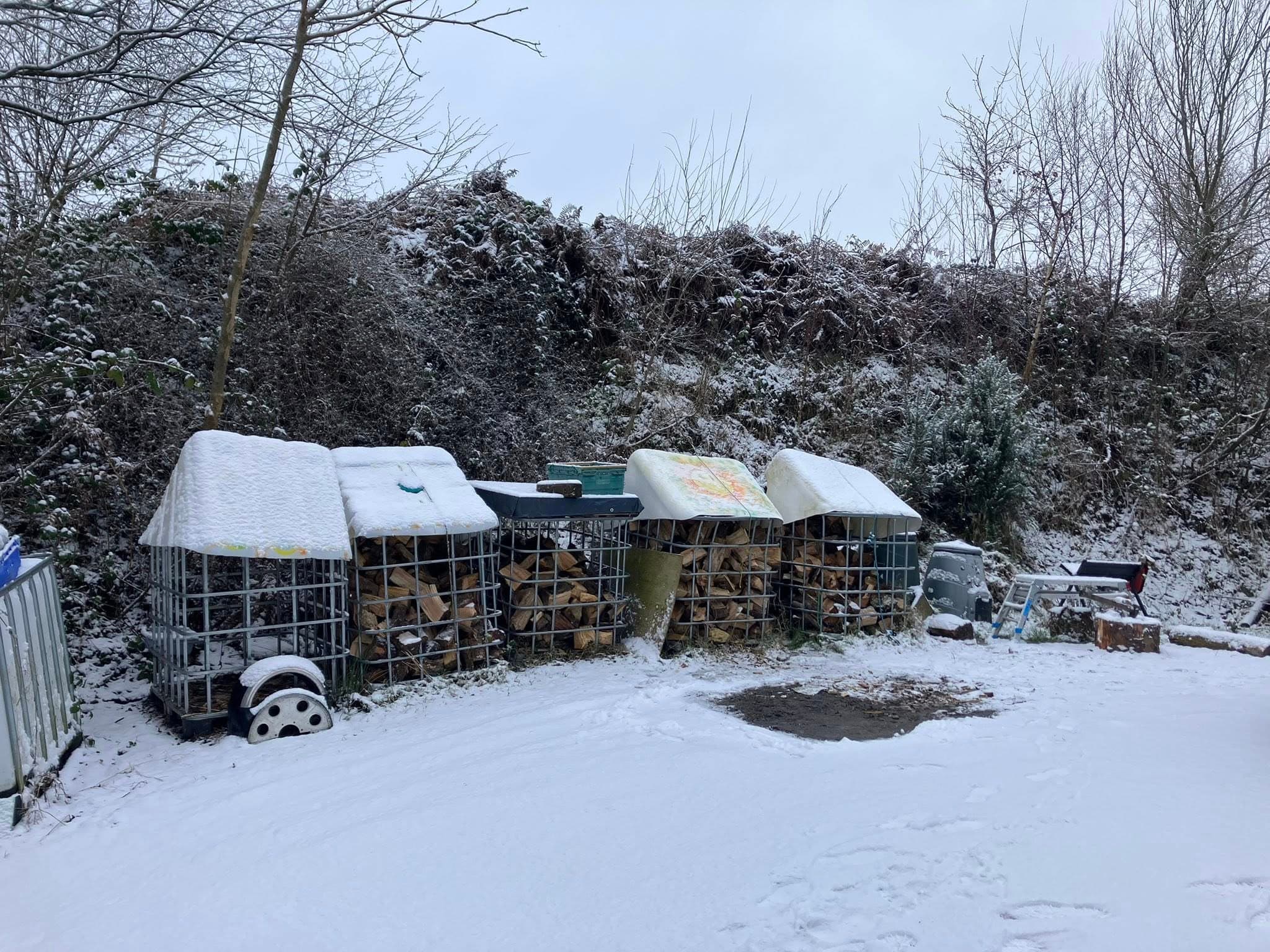
Wood-fuelled
Cooking
Bottled gas
There are no mains utility connections of any kind.
Rewilding Oakwood
Much of the twelve acres is being managed for nature. The aim is not to impose a finished landscape, but to help natural processes recover while giving them a nudge where useful.
Land & Habitats
Woodland is being expanded with native and other suitable trees, while hedgerows, scrub, brash piles and areas of long vegetation create a wider range of habitats. Wildflowers are being encouraged and sown in selected areas, while other parts of the land are largely being allowed to develop by themselves.
Pond-da-Rosa
Pond-da-Rosa and the surrounding former Lake Rose area are developing into a mixture of wetland, seasonally damp ground and pioneer vegetation. The changing plant communities are being monitored as the land recolonises naturally, alongside selective planting and sowing around the pond margins.
Watching What Happens
Species are regularly recorded across the fields, woodland, stream edges and pond area. The project is deliberately observational as well as practical: interventions are made, their effects watched, and plans altered as the ecology of Oakwood develops.
Mutual Aid
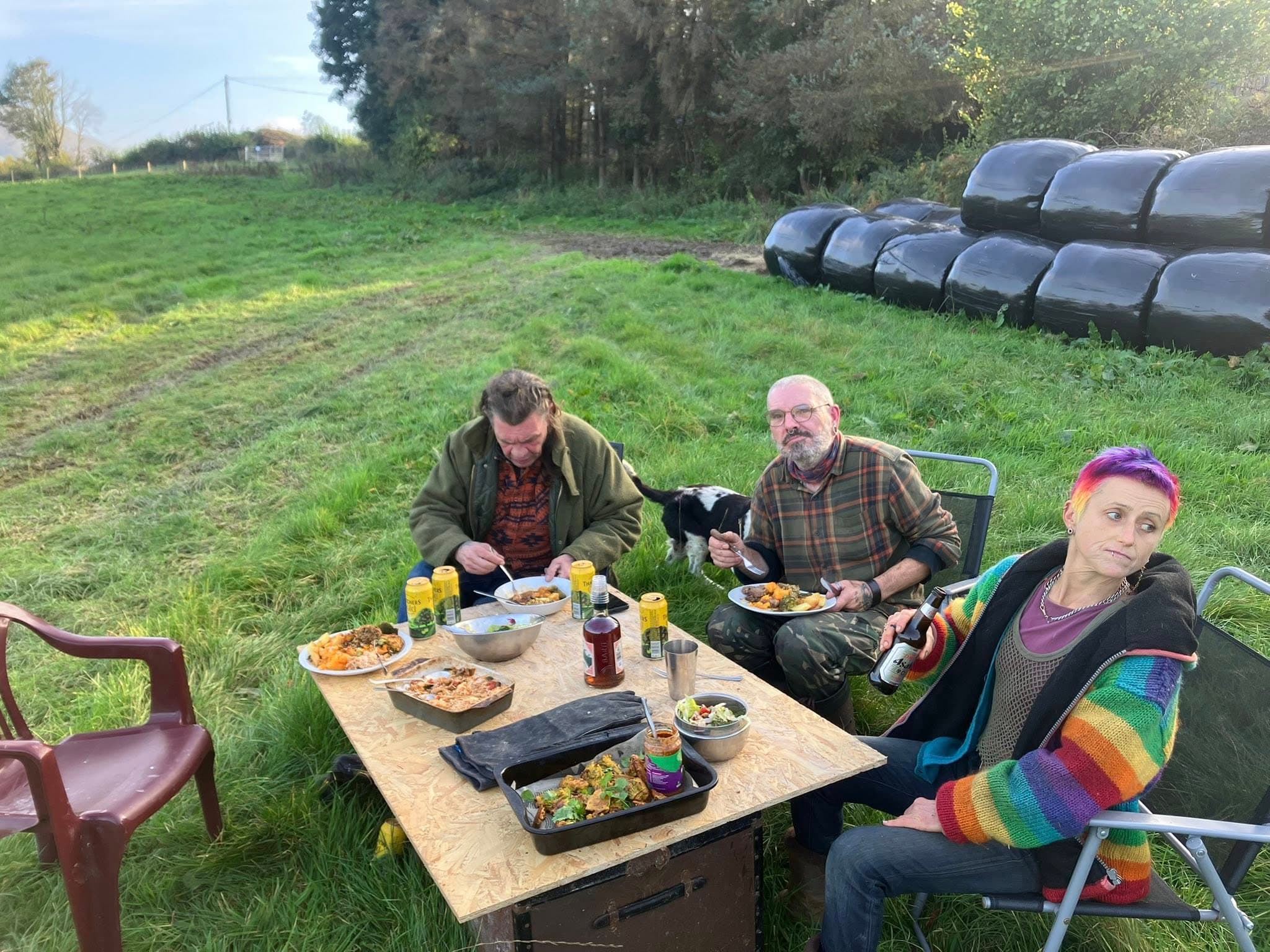
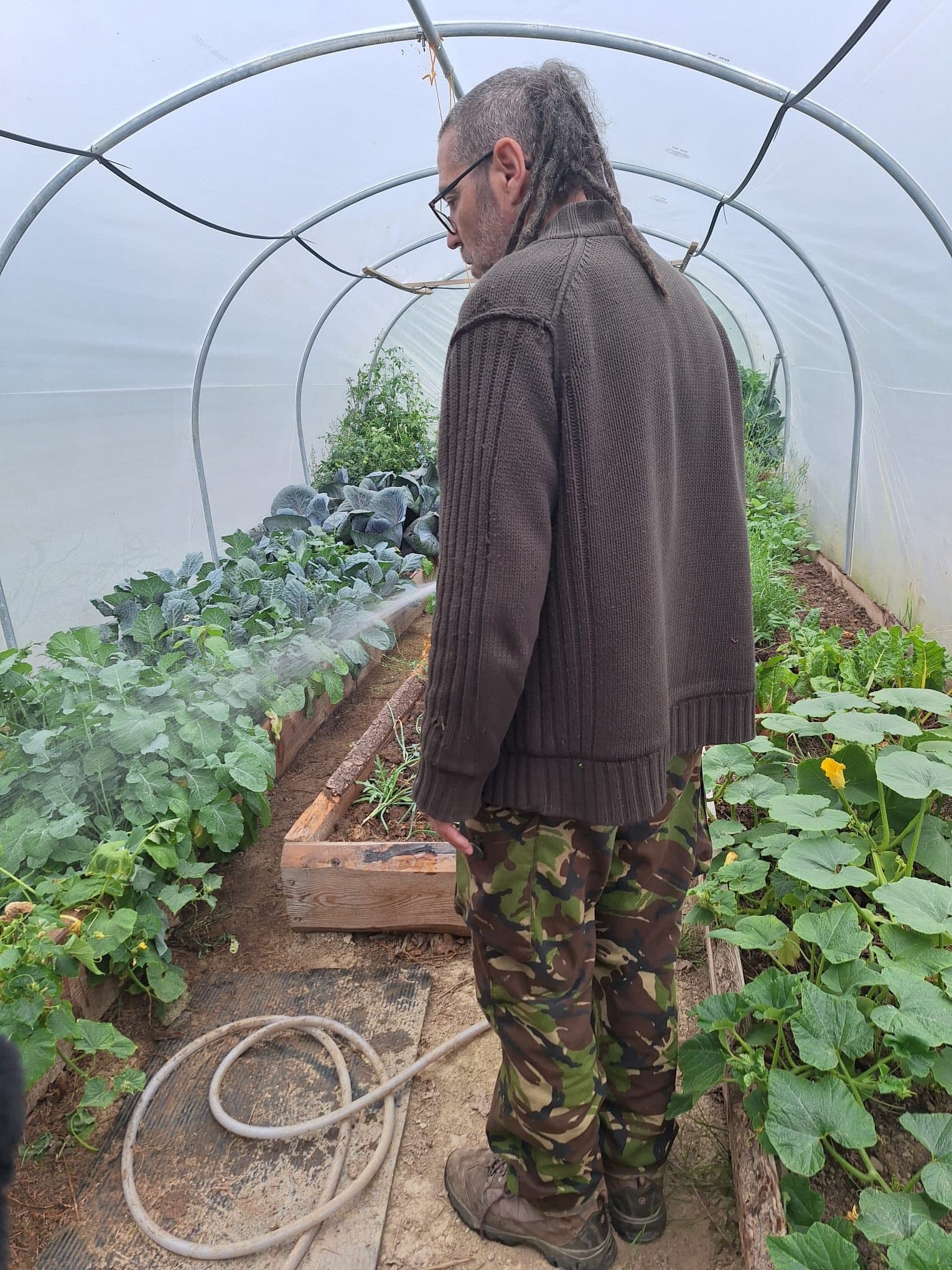
Friends live on the land rent-free, all off-grid, practising mutual aid through shared cooking, labour and support rather than money. The practical arrangements evolve with the people involved, rather than being imposed through a formal hierarchy.
Life at Oakwood
Not a Retreat
We are embedded in the local area – supporting the village pub, using local tradespeople, and hosting health and wellness events through my partner's work. It is not a retreat from society, but a grounded, cooperative way of living that reduces dependency while strengthening real community.